Operational risk
A preventive and decentralised management model
Operational risk is linked to the possibility of suffering losses due to failures of internal processes, people or systems or due to external events (such as natural disasters), including legal risks.
Bankinter's operational risk management model is the so-called standard method, according to current solvency regulations. Its use requires the existence of systems for identification, measurement and management of operational risks, prior authorisation from the Banco de España and an annual audit. Bankinter ensures access to best sector management practices by participating in the Spanish Operational Risk Consortium (Consorcio Español de Riesgo de Operacional), a forum of financial institutions for sharing experiences regarding operational risk management.
In order to achieve an efficient operational risk management scheme, the bank establishes the following basic principles of action:
- Management aimed at preventive mitigation of the greatest operational risks.
- Decentralised operational risk management model.
- Periodic review of the situation and degree of management of operational risks in each unit.
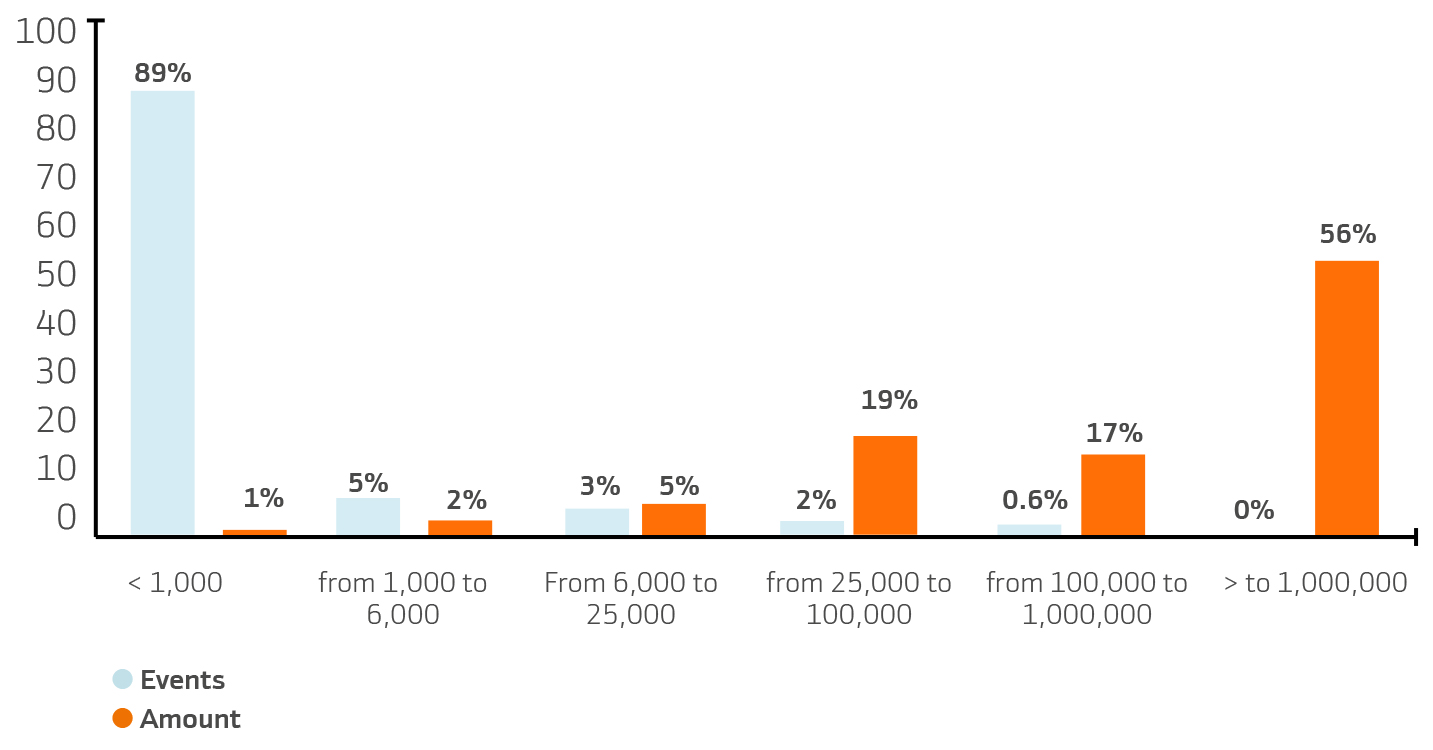
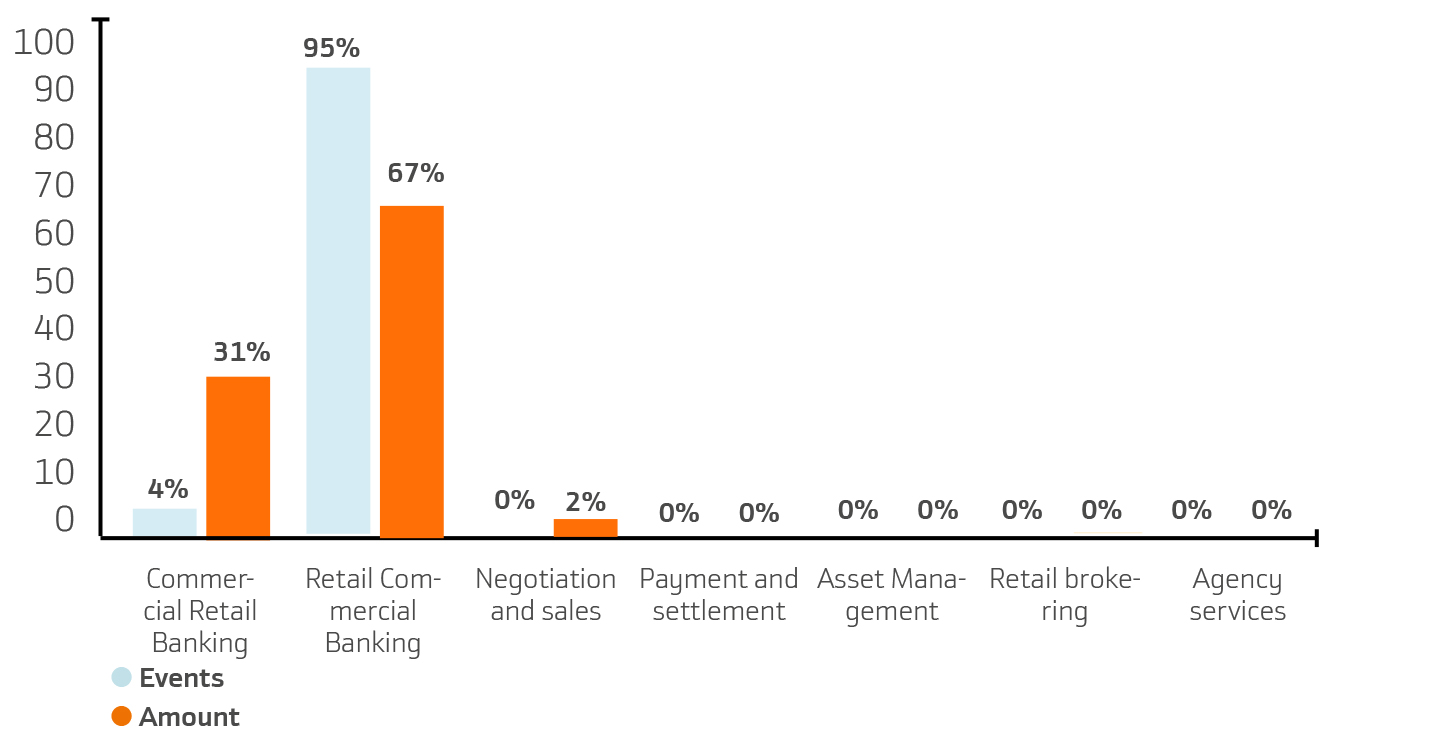
Regarding loss events for the year, Bankinter's operational risk profile is reflected in the following graphs.
Percentage breakdown by amount intervals
Percentage distribution by business line
Furthermore, a new European Union Regulation was published in June 2024, modifying the requirements for operational risk, among others. With regard to the operational risk management framework, it is decided to replace the three existing methods for estimating capital requirements (basic, standard and advanced) with a single non-model-based method, newly designated as the standard method. These changes apply from 1 January 2025 and Bankinter has adapted its operational risk management framework to comply with the new regulatory requirements.
Insurance as a form of coverage
Bankinter uses insurance as a key element in the management of certain operational risks, thus complementing their mitigation in those cases that require it by their nature. To this end, the convenience of taking out insurance policies to cover the various operational risks is assessed on a regular basis.
More detailed information on these risks can be found in the Prudential Relevance Report, the Group's Consolidated Legal Report and the Annual Corporate Governance Report. The progress made in 2024 in the portfolio's climate risk management is explained in detail in the Non-Financial Information Statement.