

Social involvement

Bankinter carries out a number of different training programmes aimed at achieving easy, cordial, two-way relations between employees and customers.

With the ‘A bank for all’ project, the Bank pursues an inclusive strategy for customers, employees and organisations in the non-profit and voluntary sector.

A more integrating and inclusive bank. The ‘A bank for all’ project aims to incorporate disability along the entire length of the Bank's value chain.

This social commitment finds expression in the implementation of a large number of programmes promoting physical, technological and communications accessibility, as well as the development of professional volunteer work (through its "Mueve.te" Platform) and support for the non-profit and voluntary sector. In implementing these social initiatives, the Bank involves customers, employees and organisations from the non-profit and voluntary sector.

In 2014, with a view to promoting dialogue with the non-profit and voluntary sector, Bankinter joined the governing council of Forética, an association of Spanish companies whose mission is to promote a culture of ethical business management.

In the same line, its collaboration with the Lealtad Foundation aims at developing standardisation of the principles of transparency and best practices in the non-profit and voluntary sector.
This foundation's mission is to promote private individuals' and companies' trust in associations and foundations devoted to social action, developmental cooperation, humanitarian and environmental action, etc. (NGOs).

‘A bank for all’

Total accessibility. Bankinter is firmly committed to making all its communication channels with its stakeholder groups totally accessible. In this regard, persons with disabilities are an important group for the Bank, which offers a suitable, quality service which aims to respond to their expectations and needs.

Bankinter has also extended its accessible bank concept to people who are starting to suffer from physical or sensory limitations due to advancing age. The inversion of the demographic pyramid as a result of the gradual ageing of the population and greater life expectancy has prompted the Bank to take action to adapt to the needs and concerns of the growing proportion of elderly people.

Universal Accessibility Management System

Equal opportunity for all. In order to ensure continuous improvement in the management of accessibility and to fulfil its Accessibility Policy, signed in 2010, Bankinter has implemented a Universal Accessibility Management System. Based on the principle of non-discrimination, it makes appropriate and accessible facilities, resources and services available to all persons who interact with the Bank.

With the objective of adapting it quickly to new external or internal requirements, this policy is regularly reviewed by the Sustainability Committee, which is the body responsible for overseeing compliance with the policy, driving the actions taken in this field and following up on them.

Renewal of accessibility certifications

Bankinter encourages e-accessibility and uses the new technologies as a key element for integration.

The sign-language video call, unique in the world financial sector, offers a comprehensive advisory service from the Bank's professionals.

have made the necessary improvements to become accessible centres for persons with limited mobility
99.5% of Bankinter's branches

Physical accessibility. The Universal Accessibility Management System implemented by Bankinter is ISO 170001-2 certified. In 2014 we extended its scope, which now covers the head office at Paseo de la Castellana 29, Madrid, and seven branches in Madrid, Valencia, Cuenca, Andalusia and
the Canary Islands. A programme is in place to extend the system to the main branches of each regional organisation of the Bank.

Reflecting the Bank's commitment to eliminating all kinds of barriers to accessibility, we would point out that 99.5% of branches have undertaken the necessary improvements and are now fully accessible to persons with limited mobility. In this regard, differences in floor levels have been eliminated, the door opening system improved and furniture with no edges or corners installed, creating easily navigable spaces to facilitate circulation, as well as a host of other improvements.

Technological accessibility. The Bank has an ‘ICT Accessibility Operational Plan’, which is aimed at consolidating a working methodology that ensures that accessibility is integrated into all its processes, both in the access channels and in the design of products and services. This enables the day-to-day lives of these persons and their access to financial services to be normalised.

The accessibility of Bankinter's website has been confirmed by an external audit, according to which bankinter.com meets the accessibility requirements for AENOR's TIC accessibility certification under UNE 139803, AA+WCAG 2.0 level.

The Bank also continues to work on accessibility for mobile applications, to ensure online access to Bankinter.

Given the large percentage of banking transactions that Bankinter's customers carry out via mobile, internet and telephone (close to 70%), we consider it a matter of priority to make these remote channels as accessible as possible. Among the accessible services that have been launched, we would highlight for example the code card in Braille for telephone banking, monthly statements in large print and audio format, an accessible video player and a sign language video-call service accessible from all branch offices.

This last-mentioned service, unique in the financial sector, is not merely a translation service, but offers comprehensive advice from Bank professionals with a command of sign language.

In this same line, in this past year we signed a collaboration agreement with CNSE (Spain's national association for the deaf) for the development of a training programme on common banking concepts to facilitate communication with persons affected by hearing loss. The course, which will be delivered by the head of the video-call service, will take place in the various regional associations of the CNSE over the course of 2015 at two levels, basic and advanced.

'Adaptative' project for the National Hospital for Paraplegics in Toledo

Bankinter has made the most advanced technological systems available to Spain's leading centre for the rehabilitation of patients with spinal cord injuries.

The technology installed includes notably: the eye-tracking system (eye mouse), wireless receivers, joystick adapters for motorised wheelchairs, the digital blackboard and the top-of-the- range tablets for eye monitoring equipment.

Bankinter, Based on its commitment to disability, and with the conviction that innovation and the new technologies are two elements that facilitate accessibility, in 2014 Bankinter launched the ‘Adaptative’ project in the National Hospital for Paraplegics in Toledo. Bankinter thus further strengthens the collaboration it has maintained for two years now with Spain's leading centre for the rehabilitation of patients with spinal cord injuries.

Through its “Adaptative” project, Bankinter provides patients of the hospital with the most advanced technological rehabilitation and online training equipment for persons with disabilities. This equipment includes notably: the eye-tracking system (eye mouse), specially adapted trackball mice, wireless receivers, joystick adapters for motorised wheelchairs, specific software licences for augmentative communication, high-definition video conference systems, digital blackboards and topof- the-range tablets adapted for eye monitoring equipment.

The selection of this equipment, installed in various different areas of the hospital, was preceded by research work carried out by Bankinter's technological subsidiary, Gneis Global Services, which analysed the various needs of patients depending on their degree of disability so as to enable them to interact normally with the digital world.

Access to this technology enables patients to use better suited training methods, so that they can continue their studies, and favour their rehabilitation in the way best suited to each case.

The project has four different spaces:

  1. The classroom, a space designed so that students can take properly graded training classes, from primary to university, thanks to the combination of technology and itinerant teachers.
  2. The rehabilitation classroom, where technological adaptation, individually guided for each patient, takes place.
  3. The library, where a video-conference system has been installed to facilitate communication between teachers and students.
  4. The ‘Bankinter Cyber-classroom’, which has 22 workstations at which various training activities take place and which allow patients and their relatives to use the Internet.

Financial literacy and integration programmes

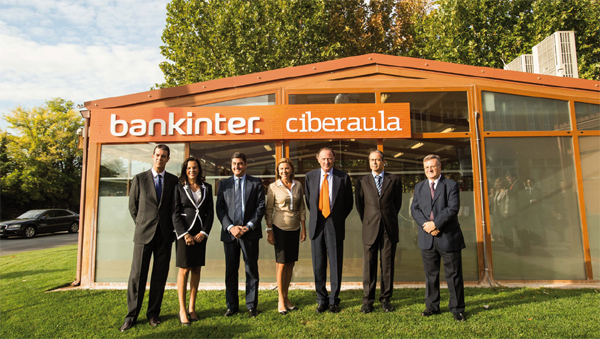
Bankinter participates in numerous initiatives with the objective of improving the financial culture of students and persons with disabilities.

The Bank has launched a pilot project to provide financial literacy to primary school children using a Nintendo video game.

Towards financial integration. Bankinter has incorporated online and face-to-face courses into its training plan so as to give qualified attention adapted to each disability, to achieve easy, cordial, two-way relations. As part of the same drive, all the necessary instructions and tips for providing topquality service to disabled people have been included in the Service Protocol.

Also, in collaboration with Fundación ONCE (Spanish Association for the Blind), a Manual for Attending to Persons with Disabilities in banking services has been prepared to serve as support and a reference for branch network employees to consult.

In branches with the certified universal physical accessibility management system, theoretical training has been combined with practical workshops in which various operations are simulated, as well as experiential workshops in which employees can put themselves in the shoes of a disabled person and thus develop their capacity for empathy.

As a complement to the actions directed at employees, Bankinter seeks to bring finance closer to people who, because of their disability, may have found themselves excluded, or have had to rely on others in their dealings with banks. It involves enabling them to access banks independently and integrating this routine into their daily lives. This is the objective pursued by the various programmes developed by Bankinter, notably:

  1. A four-module training programme on banking concepts and operations for persons with intellectual disabilities. It was delivered by twelve volunteers from the Bank, who had previously been trained by means of the innovative LSP (Lego Serious Play) method, and was attended by twelve students.
  2. A financial training programme delivered by volunteers from the Bank to students with intellectual disabilities from Fundación Estudiantes and Grupo Amás, which took place over two days in November and December.
  3. A programme of mentoring, which started in December in collaboration with the Fundación Carmen Pardo-Valcarce and which will continue until June 2015. In this programme, volunteers from the Bank act as mentor to firstand second-year students of this foundation.

These kinds of training initiatives are much appreciated by employees, who find the experience highly necessary and rewarding, since it forces them to develop specific skills in adapting their communication to suit the interlocutor.

Financial Literacy Programmes. Over the course of 2014 Bankinter took part in several open education programmes for citizens, not only for current or potential users of financial products and services.

In this regard, in June the Bank subscribed to the agreement signed by the AEB (Spanish Banking Association) with Banco de España (Spain's central bank) and the CNMV (Spain's National Securities Market Commission) for the development of actions in the field of financial literacy, which has been placed under the Financial Literacy Plan for 2013-2017.

This is a sectoral initiative that seeks to promote financial literacy among Spanish youth through corporate volunteer programmes, with the objective of training 5,000 young people from second- and third-year secondary school students.

Employee volunteers from Bankinter will take part in a qualification programme which the Junior Achievement Foundation will carry out, and in which the chairmen of the member organisations will also participate. The programme will run throughout 2015 and will be presented in European Money Week in March. This agreement adds to the financial literacy programme which Bankinter launched in 2014 together with Nintendo to train primary school children in basic concepts of economy, education
in economic values (saving, entrepreneurship, etc.) and financial skills using the video game ‘Animal Crossing’ as a tool.

During 2014 this course was delivered by six volunteers from Bankinter in four schools in the Madrid region, with the participation of 300 primary school pupils, and training based on this
kind of tool was seen to be very effective.

Corporate volunteer programme

Bankinter has developed a new line in volunteer work which it executes on the basis of its employees' financial and business knowledge.

It collaborates with foundations and NGOs on projects that require financial or management training, in order to facilitate inclusion in work through entrepreneurship.

Promoting volunteer work. Bankinter has a specific platform for managing volunteer work, called ‘Mueve.te’ (‘Move Yourself’) where employees can suggest volunteer work sessions and check and register for those arranged by the Bank, which are always related to the strategic lines and the main stakeholder groups identified in the ‘Noughts and Crosses’ Plan.
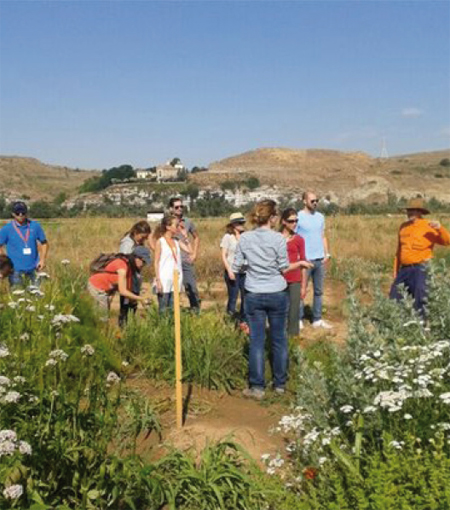
The Bank's approach to volunteer work is based on the idea that a good way of contributing to the development of society and its environment is to make the financial and business knowledge it has built up available to society. In 2014, a qualified volunteer programme was promoted for collaborating with foundations and NGOs on projects that require financial or management training.

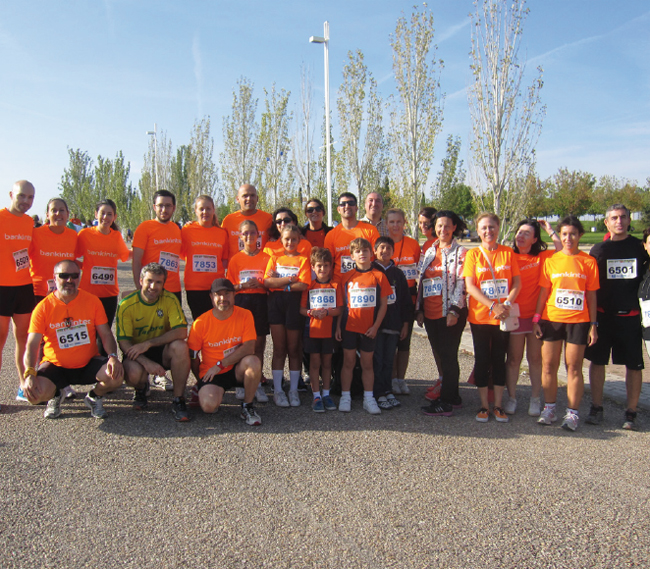
Also, over the course of the year, the Bank held various working sessions on volunteering, focusing on sporting, environmental and cultural activities with persons with disabilities or dependency. In all, 37 activities were carried out (12 sporting, 10 environmental, 10 social/ cultural and 5 educational/financial integration), with the participation of 425 volunteers from the Bank, which is 10.2% of the total workforce.
Solidarity Initiatives

Bankinter currently has solidarity accounts open with UNICEF, Caritas Española, Oxfam Intermón and the Spanish Red Cross.
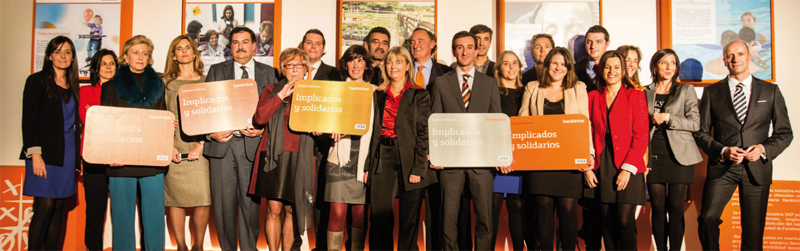
 

Among the solidarity initiatives carried out during 2014 the following stand out:

Involved and Caring

In 2014 Bankinter held the Third Edition of the "Involved and Caring” programme. a 360º initiative that involves as participants the Bank's various stakeholder groups; customers who use the Bankinter Solidarity Visa card; the Bank's employees, who put forward 49 different social projects; society, which participates in the project and publicises it on the social networks; and the Bank's executives, who act as sponsors of the various projects.

The projects selected in 2014 were: Cáritas Bizkaia, with its “Full Life” project, won gold; The National Paraplegic Hospital Foundation of Toledo earned silver with the “Training, Leisure and Free Time” programme; and the bronze medal went to Fundación Bobath for “Support Technology”. The two runner-up prizes were given to APHISA for the “Taking a Long Stroll” project and to Down Madrid for “D-verde, our First Special Job Centre”.

The five initiatives chosen, which received grants of between €5,000 and €12,000, are financed from the profits obtained from the Solidarity Visa Card.

These projects stand out because of their innovative potential, and because they are closely connected with the day-to-day reality of people in need, and some of them are highly leveraged by the efficient use of technology. In short, they are projects very much in line with the distinctive features of Bankinter's identity.

Solidarity accounts

On the Bank's website a system has been developed for alerting the public to humanitarian emergencies, with a view to collecting donations from customers wishing to offer help and relief in these emergencies. These ‘solidarity transfers’ are exempt from commissions both for the remitter (donor) and the recipient (beneficiary NGO).

The Bank also has an instant alert system for informing customers of emergencies by messaging, to which customers can reply stating how much they wish to donate. This automatically generates a ‘solidarity transfer’ from the customer’s account to the beneficiary NGO.

Bankinter currently has solidarity accounts open with UNICEF, Caritas Spain, Oxfam Intermón and the Spanish Red Cross.

‘Waste Not, Want Not’ project

The Bank has signed a collaboration agreement with the Valora Foundation for handling the donation of its business surpluses to the institutions that need them.

‘Donate your Mobile’ project

The Bank participates in the campaign run by the Spanish Red Cross and the Entreculturas Foundation for customers and employees to donate old mobile phones for reuse or recycling.

Blood donation

As in previous years, blood donation campaigns were run in the bank's main centres in the Community of Madrid.

Food collection

In December, in collaboration with the Valora Foundation, a Christmas food collection campaign was carried out among the workforce, and the food was subsequently distributed among 17 social services centres for disadvantaged groups. The Bank contributed a similar quantity of food to that collected by the workforce.

Social involvement

Bankinter carries out a number of different training programmes aimed at achieving easy, cordial, two-way relations between employees and customers.

With the ‘A bank for all’ project, the Bank pursues an inclusive strategy for customers, employees and organisations in the non-profit and voluntary sector.

A more integrating and inclusive bank. The ‘A bank for all’ project aims to incorporate disability along the entire length of the Bank's value chain.

This social commitment finds expression in the implementation of a large number of programmes promoting physical, technological and communications accessibility, as well as the development of professional volunteer work (through its "Mueve.te" Platform) and support for the non-profit and voluntary sector. In implementing these social initiatives, the Bank involves customers, employees and organisations from the non-profit and voluntary sector.

In 2014, with a view to promoting dialogue with the non-profit and voluntary sector, Bankinter joined the governing council of Forética, an association of Spanish companies whose mission is to promote a culture of ethical business management.

In the same line, its collaboration with the Lealtad Foundation aims at developing standardisation of the principles of transparency and best practices in the non-profit and voluntary sector.
This foundation's mission is to promote private individuals' and companies' trust in associations and foundations devoted to social action, developmental cooperation, humanitarian and environmental action, etc. (NGOs).

‘A bank for all’

Total accessibility. Bankinter is firmly committed to making all its communication channels with its stakeholder groups totally accessible. In this regard, persons with disabilities are an important group for the Bank, which offers a suitable, quality service which aims to respond to their expectations and needs.

Bankinter has also extended its accessible bank concept to people who are starting to suffer from physical or sensory limitations due to advancing age. The inversion of the demographic pyramid as a result of the gradual ageing of the population and greater life expectancy has prompted the Bank to take action to adapt to the needs and concerns of the growing proportion of elderly people.

Universal Accessibility Management System

Equal opportunity for all. In order to ensure continuous improvement in the management of accessibility and to fulfil its Accessibility Policy, signed in 2010, Bankinter has implemented a Universal Accessibility Management System. Based on the principle of non-discrimination, it makes appropriate and accessible facilities, resources and services available to all persons who interact with the Bank.

With the objective of adapting it quickly to new external or internal requirements, this policy is regularly reviewed by the Sustainability Committee, which is the body responsible for overseeing compliance with the policy, driving the actions taken in this field and following up on them.

Renewal of accessibility certifications

Bankinter encourages e-accessibility and uses the new technologies as a key element for integration.

The sign-language video call, unique in the world financial sector, offers a comprehensive advisory service from the Bank's professionals.

have made the necessary improvements to become accessible centres for persons with limited mobility
99.5% of Bankinter's branches

Physical accessibility. The Universal Accessibility Management System implemented by Bankinter is ISO 170001-2 certified. In 2014 we extended its scope, which now covers the head office at Paseo de la Castellana 29, Madrid, and seven branches in Madrid, Valencia, Cuenca, Andalusia and
the Canary Islands. A programme is in place to extend the system to the main branches of each regional organisation of the Bank.

Reflecting the Bank's commitment to eliminating all kinds of barriers to accessibility, we would point out that 99.5% of branches have undertaken the necessary improvements and are now fully accessible to persons with limited mobility. In this regard, differences in floor levels have been eliminated, the door opening system improved and furniture with no edges or corners installed, creating easily navigable spaces to facilitate circulation, as well as a host of other improvements.

Technological accessibility. The Bank has an ‘ICT Accessibility Operational Plan’, which is aimed at consolidating a working methodology that ensures that accessibility is integrated into all its processes, both in the access channels and in the design of products and services. This enables the day-to-day lives of these persons and their access to financial services to be normalised.

The accessibility of Bankinter's website has been confirmed by an external audit, according to which bankinter.com meets the accessibility requirements for AENOR's TIC accessibility certification under UNE 139803, AA+WCAG 2.0 level.

The Bank also continues to work on accessibility for mobile applications, to ensure online access to Bankinter.

Given the large percentage of banking transactions that Bankinter's customers carry out via mobile, internet and telephone (close to 70%), we consider it a matter of priority to make these remote channels as accessible as possible. Among the accessible services that have been launched, we would highlight for example the code card in Braille for telephone banking, monthly statements in large print and audio format, an accessible video player and a sign language video-call service accessible from all branch offices.

This last-mentioned service, unique in the financial sector, is not merely a translation service, but offers comprehensive advice from Bank professionals with a command of sign language.

In this same line, in this past year we signed a collaboration agreement with CNSE (Spain's national association for the deaf) for the development of a training programme on common banking concepts to facilitate communication with persons affected by hearing loss. The course, which will be delivered by the head of the video-call service, will take place in the various regional associations of the CNSE over the course of 2015 at two levels, basic and advanced.

'Adaptative' project for the National Hospital for Paraplegics in Toledo

Bankinter has made the most advanced technological systems available to Spain's leading centre for the rehabilitation of patients with spinal cord injuries.

The technology installed includes notably: the eye-tracking system (eye mouse), wireless receivers, joystick adapters for motorised wheelchairs, the digital blackboard and the top-of-the- range tablets for eye monitoring equipment.

Bankinter, Based on its commitment to disability, and with the conviction that innovation and the new technologies are two elements that facilitate accessibility, in 2014 Bankinter launched the ‘Adaptative’ project in the National Hospital for Paraplegics in Toledo. Bankinter thus further strengthens the collaboration it has maintained for two years now with Spain's leading centre for the rehabilitation of patients with spinal cord injuries.

Through its “Adaptative” project, Bankinter provides patients of the hospital with the most advanced technological rehabilitation and online training equipment for persons with disabilities. This equipment includes notably: the eye-tracking system (eye mouse), specially adapted trackball mice, wireless receivers, joystick adapters for motorised wheelchairs, specific software licences for augmentative communication, high-definition video conference systems, digital blackboards and topof- the-range tablets adapted for eye monitoring equipment.

The selection of this equipment, installed in various different areas of the hospital, was preceded by research work carried out by Bankinter's technological subsidiary, Gneis Global Services, which analysed the various needs of patients depending on their degree of disability so as to enable them to interact normally with the digital world.

Access to this technology enables patients to use better suited training methods, so that they can continue their studies, and favour their rehabilitation in the way best suited to each case.

The project has four different spaces:

  1. The classroom, a space designed so that students can take properly graded training classes, from primary to university, thanks to the combination of technology and itinerant teachers.
  2. The rehabilitation classroom, where technological adaptation, individually guided for each patient, takes place.
  3. The library, where a video-conference system has been installed to facilitate communication between teachers and students.
  4. The ‘Bankinter Cyber-classroom’, which has 22 workstations at which various training activities take place and which allow patients and their relatives to use the Internet.

Financial literacy and integration programmes

Bankinter participates in numerous initiatives with the objective of improving the financial culture of students and persons with disabilities.

The Bank has launched a pilot project to provide financial literacy to primary school children using a Nintendo video game.

Towards financial integration. Bankinter has incorporated online and face-to-face courses into its training plan so as to give qualified attention adapted to each disability, to achieve easy, cordial, two-way relations. As part of the same drive, all the necessary instructions and tips for providing topquality service to disabled people have been included in the Service Protocol.

Also, in collaboration with Fundación ONCE (Spanish Association for the Blind), a Manual for Attending to Persons with Disabilities in banking services has been prepared to serve as support and a reference for branch network employees to consult.

In branches with the certified universal physical accessibility management system, theoretical training has been combined with practical workshops in which various operations are simulated, as well as experiential workshops in which employees can put themselves in the shoes of a disabled person and thus develop their capacity for empathy.

As a complement to the actions directed at employees, Bankinter seeks to bring finance closer to people who, because of their disability, may have found themselves excluded, or have had to rely on others in their dealings with banks. It involves enabling them to access banks independently and integrating this routine into their daily lives. This is the objective pursued by the various programmes developed by Bankinter, notably:

  1. A four-module training programme on banking concepts and operations for persons with intellectual disabilities. It was delivered by twelve volunteers from the Bank, who had previously been trained by means of the innovative LSP (Lego Serious Play) method, and was attended by twelve students.
  2. A financial training programme delivered by volunteers from the Bank to students with intellectual disabilities from Fundación Estudiantes and Grupo Amás, which took place over two days in November and December.
  3. A programme of mentoring, which started in December in collaboration with the Fundación Carmen Pardo-Valcarce and which will continue until June 2015. In this programme, volunteers from the Bank act as mentor to firstand second-year students of this foundation.

These kinds of training initiatives are much appreciated by employees, who find the experience highly necessary and rewarding, since it forces them to develop specific skills in adapting their communication to suit the interlocutor.

Financial Literacy Programmes. Over the course of 2014 Bankinter took part in several open education programmes for citizens, not only for current or potential users of financial products and services.

In this regard, in June the Bank subscribed to the agreement signed by the AEB (Spanish Banking Association) with Banco de España (Spain's central bank) and the CNMV (Spain's National Securities Market Commission) for the development of actions in the field of financial literacy, which has been placed under the Financial Literacy Plan for 2013-2017.

This is a sectoral initiative that seeks to promote financial literacy among Spanish youth through corporate volunteer programmes, with the objective of training 5,000 young people from second- and third-year secondary school students.

Employee volunteers from Bankinter will take part in a qualification programme which the Junior Achievement Foundation will carry out, and in which the chairmen of the member organisations will also participate. The programme will run throughout 2015 and will be presented in European Money Week in March. This agreement adds to the financial literacy programme which Bankinter launched in 2014 together with Nintendo to train primary school children in basic concepts of economy, education
in economic values (saving, entrepreneurship, etc.) and financial skills using the video game ‘Animal Crossing’ as a tool.

During 2014 this course was delivered by six volunteers from Bankinter in four schools in the Madrid region, with the participation of 300 primary school pupils, and training based on this
kind of tool was seen to be very effective.

Corporate volunteer programme

Bankinter has developed a new line in volunteer work which it executes on the basis of its employees' financial and business knowledge.

It collaborates with foundations and NGOs on projects that require financial or management training, in order to facilitate inclusion in work through entrepreneurship.

Promoting volunteer work. Bankinter has a specific platform for managing volunteer work, called ‘Mueve.te’ (‘Move Yourself’) where employees can suggest volunteer work sessions and check and register for those arranged by the Bank, which are always related to the strategic lines and the main stakeholder groups identified in the ‘Noughts and Crosses’ Plan.

The Bank's approach to volunteer work is based on the idea that a good way of contributing to the development of society and its environment is to make the financial and business knowledge it has built up available to society. In 2014, a qualified volunteer programme was promoted for collaborating with foundations and NGOs on projects that require financial or management training.

Also, over the course of the year, the Bank held various working sessions on volunteering, focusing on sporting, environmental and cultural activities with persons with disabilities or dependency. In all, 37 activities were carried out (12 sporting, 10 environmental, 10 social/ cultural and 5 educational/financial integration), with the participation of 425 volunteers from the Bank, which is 10.2% of the total workforce.

Solidarity Initiatives

Bankinter currently has solidarity accounts open with UNICEF, Caritas Española, Oxfam Intermón and the Spanish Red Cross.


Among the solidarity initiatives carried out during 2014 the following stand out:

Involved and Caring

In 2014 Bankinter held the Third Edition of the "Involved and Caring” programme. a 360º initiative that involves as participants the Bank's various stakeholder groups; customers who use the Bankinter Solidarity Visa card; the Bank's employees, who put forward 49 different social projects; society, which participates in the project and publicises it on the social networks; and the Bank's executives, who act as sponsors of the various projects.

The projects selected in 2014 were: Cáritas Bizkaia, with its “Full Life” project, won gold; The National Paraplegic Hospital Foundation of Toledo earned silver with the “Training, Leisure and Free Time” programme; and the bronze medal went to Fundación Bobath for “Support Technology”. The two runner-up prizes were given to APHISA for the “Taking a Long Stroll” project and to Down Madrid for “D-verde, our First Special Job Centre”.

The five initiatives chosen, which received grants of between €5,000 and €12,000, are financed from the profits obtained from the Solidarity Visa Card.

These projects stand out because of their innovative potential, and because they are closely connected with the day-to-day reality of people in need, and some of them are highly leveraged by the efficient use of technology. In short, they are projects very much in line with the distinctive features of Bankinter's identity.

Solidarity accounts

On the Bank's website a system has been developed for alerting the public to humanitarian emergencies, with a view to collecting donations from customers wishing to offer help and relief in these emergencies. These ‘solidarity transfers’ are exempt from commissions both for the remitter (donor) and the recipient (beneficiary NGO).

The Bank also has an instant alert system for informing customers of emergencies by messaging, to which customers can reply stating how much they wish to donate. This automatically generates a ‘solidarity transfer’ from the customer’s account to the beneficiary NGO.

Bankinter currently has solidarity accounts open with UNICEF, Caritas Spain, Oxfam Intermón and the Spanish Red Cross.

‘Waste Not, Want Not’ project

The Bank has signed a collaboration agreement with the Valora Foundation for handling the donation of its business surpluses to the institutions that need them.

‘Donate your Mobile’ project

The Bank participates in the campaign run by the Spanish Red Cross and the Entreculturas Foundation for customers and employees to donate old mobile phones for reuse or recycling.

Blood donation

As in previous years, blood donation campaigns were run in the bank's main centres in the Community of Madrid.

Food collection

In December, in collaboration with the Valora Foundation, a Christmas food collection campaign was carried out among the workforce, and the food was subsequently distributed among 17 social services centres for disadvantaged groups. The Bank contributed a similar quantity of food to that collected by the workforce.