



Analysis of materiality
Bankinter has updated the list of significant aspects in sustainability management in accordance with the guidelines laid down by the Global Reporting Initiative (GRI).
During 2014, taking account of the guidelines laid down by the Global Reporting Initiative (GRI), Bankinter carried out an in-depth and updated materiality analysis. This is a dynamic process allowing Bankinter to identify the changes that occur in its environment and the expectations of its various stakeholder groups, as well as to give priority in allocating its efforts to those issues and areas that both internally and externally will contribute the greatest value to the Bank and its stakeholder groups.
Methodology. The analysis of the Bank's value chain, and regular dialogue with its stakeholder groups, provide an extensive list of significant aspects to be taken into account as regards
the economic, social and environmental management of the Bank. The following are the main mechanisms of dialogue used by Bankinter for this purpose:
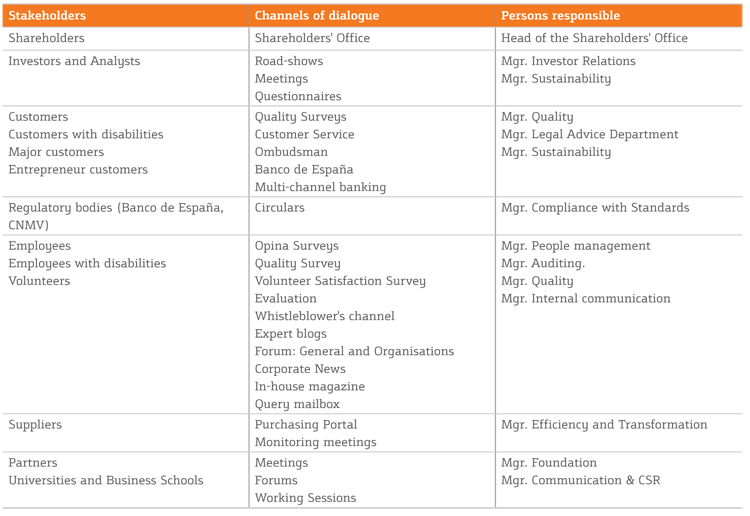
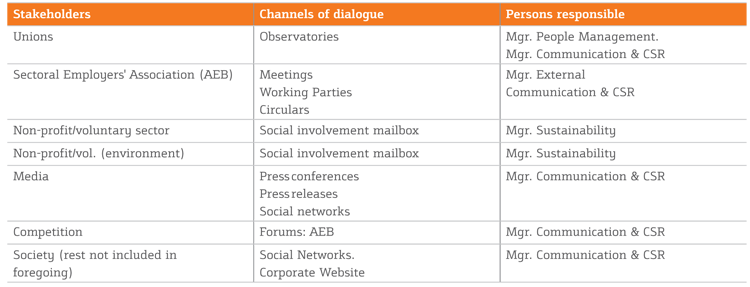
Once the significant sectoral issues have been dentified, we prioritised them in line with the importance given them by the leading analysts in sustainability and social and sectoral opinion leaders. Bankinter plans its actions taking these results into account and comparing them with the internal analysis carried out by the areas of the Bank most involved in dialogue with stakeholder groups.
Results. Using the methodology referred to above, we obtained the following results:
- Materiality matrix, showing the most significant aspects in order of importance and maturity.
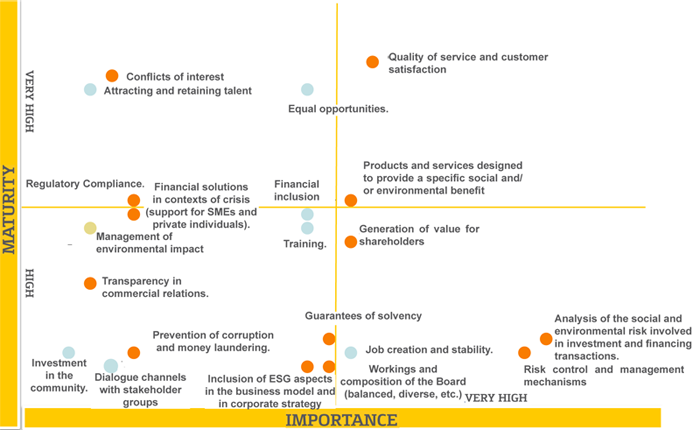
- List of most significant aspects by area:
Economic dimension:
1 Quality of service and customer satisfaction
2 Compliance with standards
3 Financial solutions in crisis contexts
4 Workings and composition of the Board
5 Guarantees of solvency
6 Risk control and management mechanisms
7 Prevention of corruption and money laundering
8 Transparency in commercial relations
9 Generation of value for shareholders
10 Inclusion of ESG aspects in the business and the strategy
11 Conflicts of interest
12 Products and services designed to provide a specific social and/or environmental benefit
13 Analysis of the social and environmental risk involved in investment and financing transactions
Social Dimension:
14 Equal opportunities
15 Financial inclusion
16 Education
17 Investment in the community
18 Job creation and stability
19 Attracting and retaining talent
20 Dialogue channels with stakeholder groups
Environmental dimension:
21 Management of environmental impact
 Download chapter in PDF