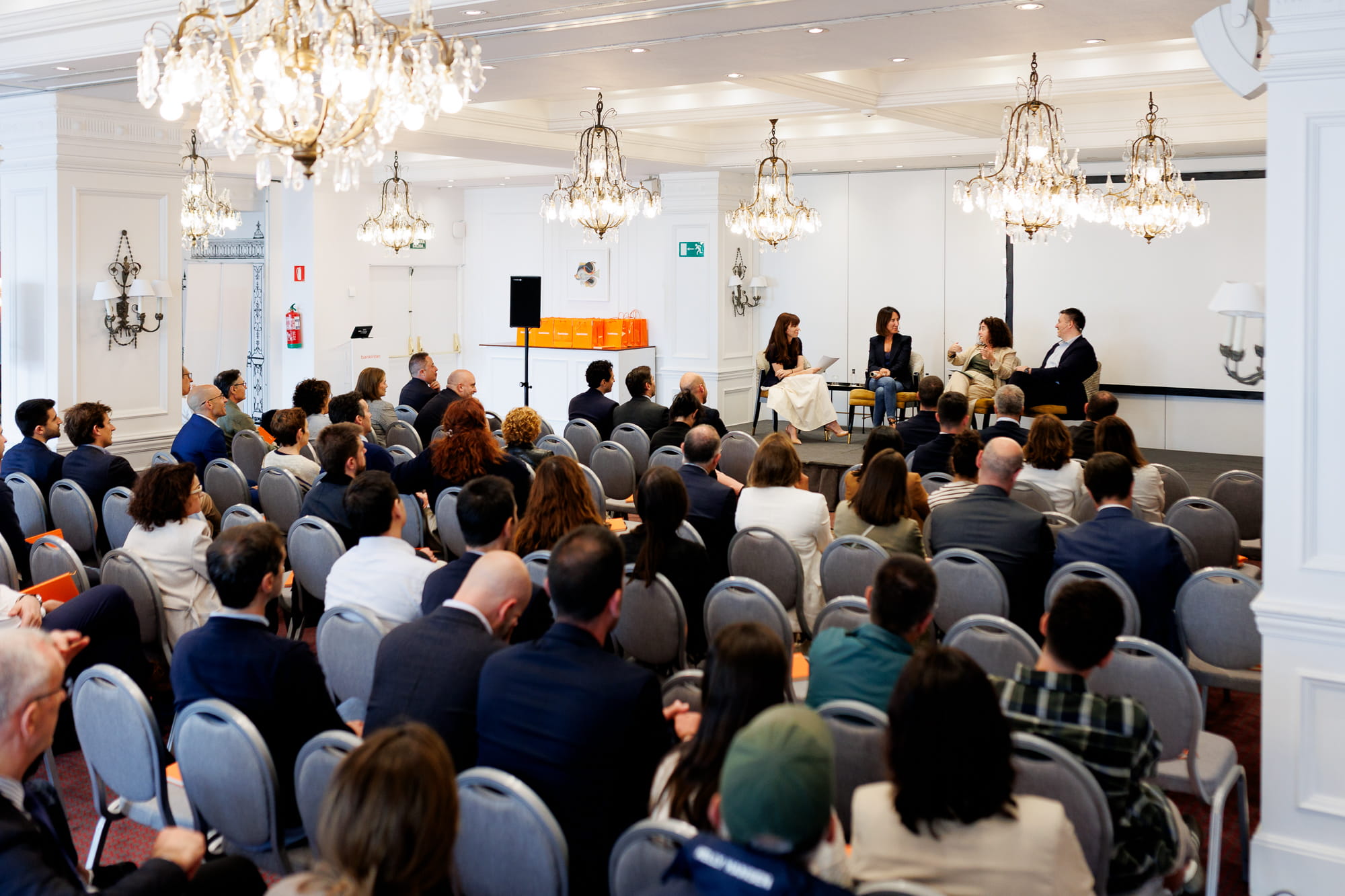
Presentation of the 5th CFO Frontline Report in San Sebastián
Transparency and human control: financial automation in the age of AI
.jpg)
Following a survey of 200 companies across 15 sectors, the report gauges the sentiment, workload and core challenges facing CFOs, as well as analysing the maturity of robotic process automation (RPA) within finance departments. A portrait of the financial function and profession that has become a benchmark in Spain.
Transparency and human control: financial automation in the age of AI.
Following a survey of 200 companies across 15 sectors, the report gauges the sentiment, workload and core challenges facing CFOs, as well as analysing the maturity of robotic process automation (RPA) within finance departments. A portrait of the financial function and profession that has become a benchmark in Spain.
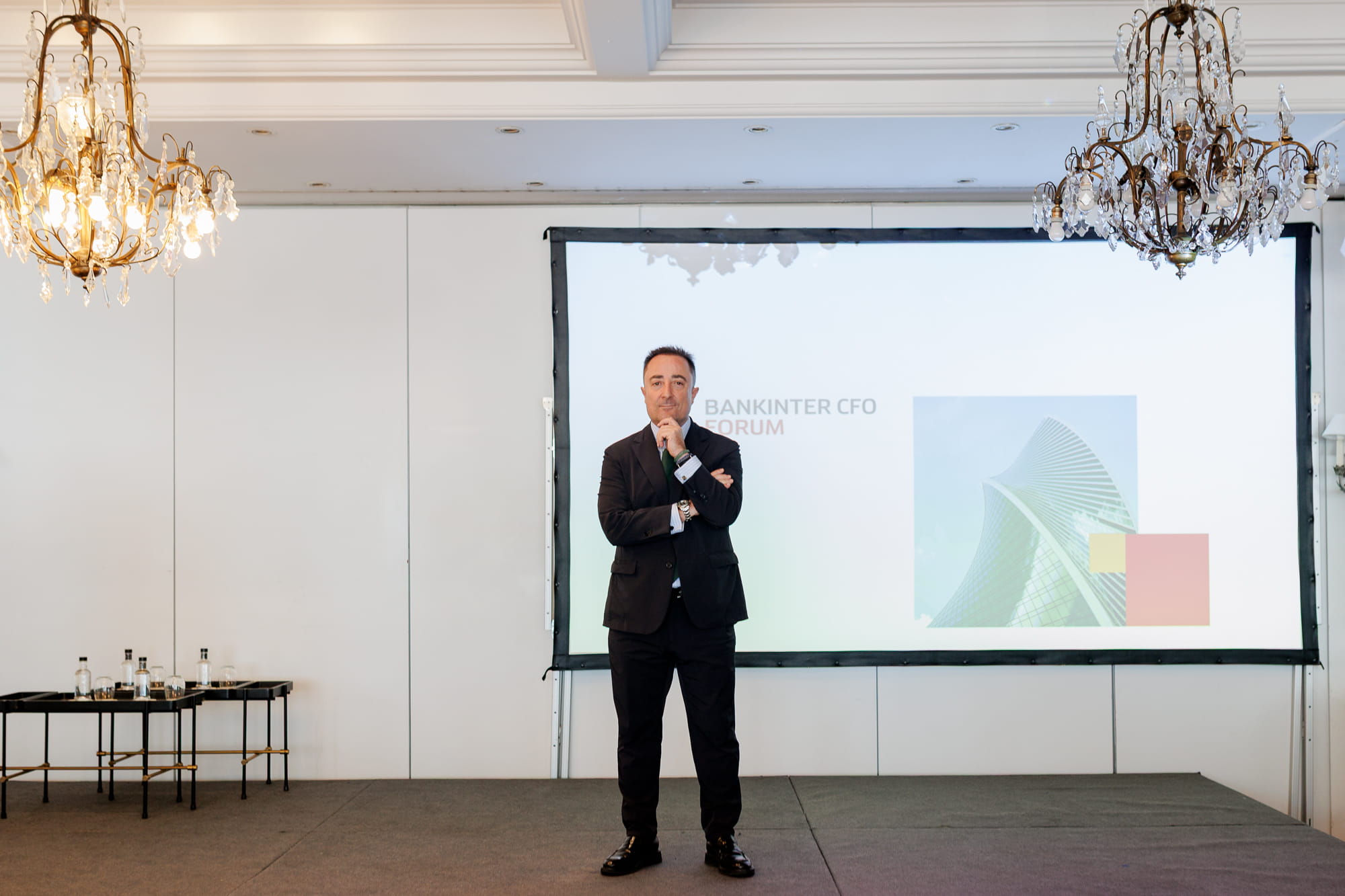
10 tips for implementing RPA (Robotic Process Automation)
Data from the CFO Frontline Report and interviews with CFOs culminate in ten tips for successfully implementing automation in organisations:
1. Automation is not optional. Not moving forward means losing the ability to react, receiving information too late and falling out of step with the actual pace of the market.
2. Rigour in decision-making is more important than speed. The solution must be adapted to the size and reality of the company.
3. Prioritise by impact and effort. Start where value is immediate, as this also helps convince our own people that the technology is useful. It's about building internal credibility.
4. Manage automation as a human process, not just a technical one. This means training, including for the finance team. Abandoning projects without a clear explanation erodes credibility and gets in the way of any subsequent initiatives.
5. Think about the destination before mapping out the route. Before automating, it is essential to define where you want to go and why, without losing the necessary flexibility.
6. Continuous improvement is the responsibility of financial leadership. Automation is not a milestone; it's a habit. Questioning, reviewing, and optimising subprocesses is what unlocks new levers of efficiency and value.
7. Finishing is just as important as starting. One of the most frequently cited risks is the proliferation of half-finished projects. Continuity and focus multiply the return on investment.
8. Investing in automation is investing in the role of the CFO. The focus shifts to analysis, process and decision-making. Automation is about creating space to add value where it really matters.
9. Start by drawing on your own knowledge before relying on third parties. This enables you to engage with partners on an equal footing, demand relevant solutions and maximise the value of specialised support.
10. Overcome your fear: the greatest risk is not taking action. The final message is clear: doing nothing is the biggest risk. Particularly in more traditional companies, automation offers more opportunities than threats in terms of efficiency, profitability and control. Automation does not diminish value; it shifts it towards where it's more strategic.
A perfectly synchronised orchestra with no fear of making mistakes
Fifteen years ago, Orbea began automating processes. The company's financial director, Nagore Larrabeiti, is convinced that automation is synonymous with efficiency and dedication to what really matters. “What is new today is already out of date tomorrow. If we need to make a decision and today’s information doesn't reach us until six weeks later, it is no longer of any use; we are already behind.”
The arrival of younger talent has accelerated innovation; they are very self-taught and bring initiative, but they must complement those abilities with the deep knowledge of the processes that the most veteran members possess. “It's a challenge for all of us to be in sync”, the CFO of Orbea pointed out at the presentation in San Sebastián. “And we need to make sure all the groups grow together”.
One of the concerns expressed in the debate and in Bankinter's own barometer is whether investment is being made wisely in AI and automation. ”You never know if you're investing in the right thing or not. You have to keep moving forward; this wheel keeps turning and you can't get off. And we may make mistakes; another better technology will come along, what we've invested in may become obsolete, but it will have helped us in our work.”
Let's not forget what's most important: people's essence, their vision, the ability to “see and smell a piece of data”, to seize the opportunity, to have a broader range of scenarios available today. “We have to learn to live with it, to stop being afraid of it. "Obviously, in five years' time there will be other things, but if you haven't grown alongside it, in five years you'll be obsolete," says the CFO of Orbea.”
“This wheel keeps turning and you can't get off. And we may make mistakes; another better technology will come along, what we've invested in may become obsolete, but it will have helped us in our work.”
And from a deep understanding of your own company, make decisions that don't necessarily have to align with those of other companies. Keep your own pace. “You need to know where you are in your life cycle. It's a matter of getting started and taking it one step at a time. It's no use putting the cart before the horse, because you'll encounter frustrations along the way,” and they can affect teams, according to Nagore Larrabeiti.
“I think we need to listen, ask questions, find out what people are telling you and whether or not it's a priority for you. Big projects don't appear overnight, from zero to one hundred. You have to go through all the stages”, recommends the CFO of Orbea.
And she concluded with a highly valuable piece of advice for approaching automation and AI implementation: “I always say, start with the people you have, the data you own and the processes you know well. I think that's a very good starting point”.
AI is a tool, but we are in control.
In businesses, whether small, medium or large, the finance function is the same. That's why it's much easier to standardise and scale automation tools than in other areas.
For Maite Etxarri, CFO of Mirai Investments Sinderor, automation in the financial area is also intrinsic to a sector like hers, where reliability and operational improvement are essential: getting more done with fewer people: “The application in the most finance-specific processes is the same”.
Nor should automation be treated as something perfect; not everything runs smoothly day-to-day, and we can't do without human intervention. “There's a lot of muck, as I say, with different formats, different systems, different ways of getting there. Once you have it set up, it doesn't matter whether you're processing 100 or 1,000 or 100,000 items, but there's always something that has to be managed by people”.
For Maite Etxarri, it's crucial that technology doesn't get the better of us. “I think the technology needs to ultimately become transparent to the user. I don't like the concept of the AI as a black box. AI is a tool, but we are in control”.
“I think the technology needs to ultimately become transparent to the user. I don't like the concept of the AI as a black box. AI is a tool, but we are in control”.
“One of the things we force [AI] to do is to document itself, that is, to document step by step what it's doing, how it is calculating things. Because otherwise, a year later nobody remembers and you'll say, how did it get this data?” pointed out the CFO of Sidenor.
We are in an overwhelming moment where changes are happening one after the other, and we need to know when to stop and bring order to things. But it's going to be exciting, says the CFO of Sidenor, and forums like the one organised by Bankinter are an opportunity to hear about other experiences and find out how people are investing and what the results are.
Automation: efficiency, control and quality.
Technology, as all the CFO consulted this year point out, is not an end in itself. For Miguel Durán, director of transformation and artificial intelligence at Bankinter, we're after are its contributions to operational efficiency. But above all, its impact on the bottom line: “This is an opportunity to compete more effectively in whatever market you are in”.
“If you don't create a supportive environment for employees to embrace that change, they are going to resist it.”
And the finance area, as noted in Bankinter's CFO Frontline Report, has historically been at the forefront of technological innovation, in terms of investment and implementation. “That drive to become more efficient has always existed within finance functions. after efficiency comes control, and after control comes quality”, Miguel Durán pointed out.
During the round table in Donosti, there was extensive discussion about the importance of the culture of transformation: doing things badly creates frustration, and there is already a certain resistance to change due to the fear AI generates.
“If you don't create a supportive environment for employees to embrace this change, they are going to resist it”, says the director of AI at Bankinter, for whom training is crucial when it comes to AI.
“I think it will be a wise move to automate all repetitive and manual tasks so that we can devote our time specifically to extracting the maximum value from artificial intelligence in decision-making, in generating information and in personalising customer services”, observed Miguel Durán.
“It will be a wise move to automate all repetitive and manual tasks so that we can devote our time specifically to extracting the maximum value from artificial intelligence in decision-making, in generating information and in personalising customer services.”
A common mistake companies make is focusing too heavily on return on investment (ROI) when it comes to AI, because this can leave out areas where profitability is less obvious and create imbalances. While not an end in itself, it should permeate the entire organisation, according to speakers at the forum.
“In AI, return on investment cannot be the sole driver when deciding where you are investing. There also needs to be a reserve for other areas that cannot be left behind”, noted Miguel Durán.