Automating the finance function: shedding dead weight to fly higher.
.jpg)
The fifth edition of the Bankinter CFO Frontline Report has focused this year on Robotic Process Automation (RPA). Where do Spanish companies stand today in terms of technological advancement? The report, after surveying 200 companies across 15 sectors, also provides a snapshot of the Spanish CFO and acts as a barometer of the sentiment within financial departments.
Automation is the technological response to the operational overload experienced by financial departments. It sets up a new financial management and leadership model: the CFO moves from being an operational manager to a strategic driver for their company.
“The role of CFO has changed significantly over recent decades. Twenty or thirty years ago, it was a slightly more operational role, focused on management control and purely on finance, but it has increasingly taken on a more strategic purpose. And now we can say that you are the CEOs' co-pilot|”, noted Maite Cañas Luzarraga, Director of Corporate Banking at Bankinter, during the presentation of the report in Malaga.
“Process automation based on digitalisation and artificial intelligence makes it possible to free up time spent on less productive tasks and reduce some manual errors. With this increased time capacity, the finance team can participate in the strategic decisions that are made daily within companies”, noted the Bankinter Deputy General Manager.
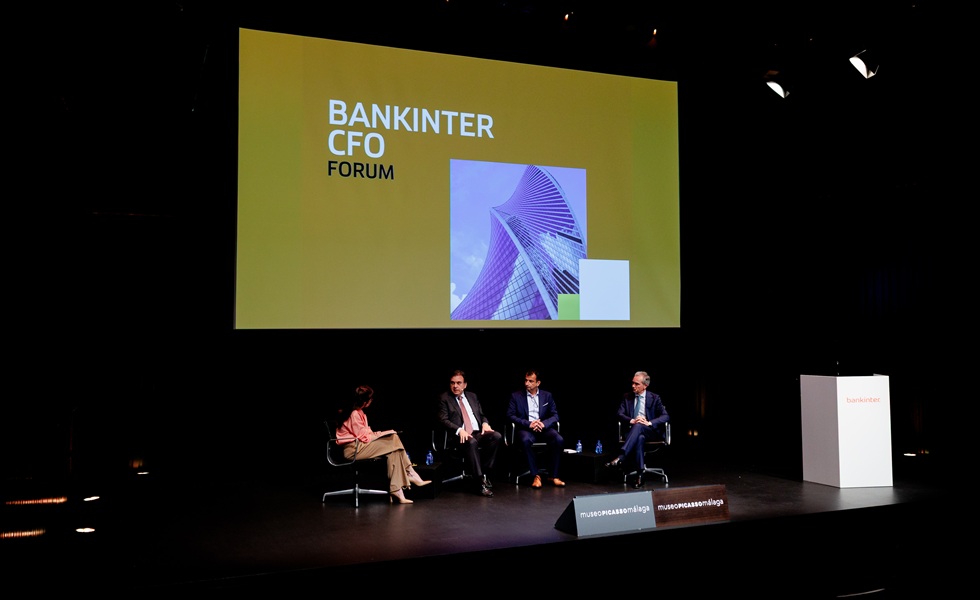
“The CFO has moved from being a more operational figure, focused on management control and purely on finance, to taking on a more strategic role. Now we can say that you are the CEOs' co-pilot”
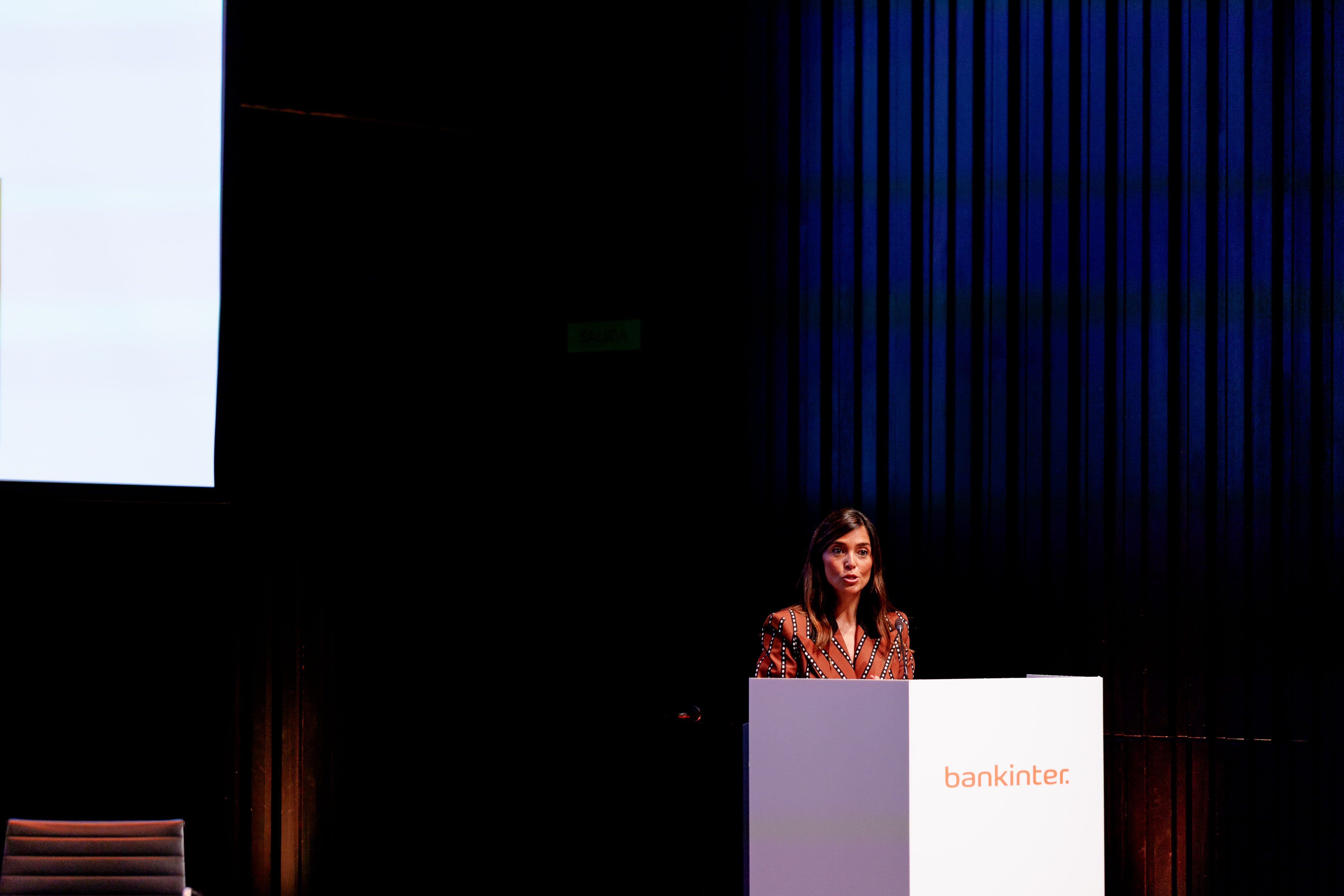
The Picasso Museum in Malaga hosted the presentation of the CFO Frontline Report, demonstrating the commitment that Bankinter – founded over 60 years ago as a bank focused on industry – maintains both to businesses and to Andalusian society, as Maite Cañas pointed out.
CFO Frontline Report: a new frontier for the financial function called RPA.
For five years, Bankinter has been asking the CFOs of Spanish companies how they view their management role, while tracking the trends and challenges they face: this year it was time to talk about automation. These are the main headlines:
1. What is happening between the CEO and the CFO? Every year, we ask about the top 10 concerns of CFOs in Spain. In 2026, CFOs are concerned with – in this order – treasury management, the relationship with the CEO and the talent within the financial team. The issues growing the most compared to the previous edition are the relationship with the CEO (moving from eighth to second place) and relationships with suppliers in the area, from financial institutions to tax advisors or managers, which has risen three positions in the ranking.
2. Spotlight on operational efficiency. What are CFOs focusing on? Treasury management remains the primary focus, but its importance has declined relative to the search for operational efficiency. This year's barometer also reflects a slowdown in the digital transformation of the financial department. As highlighted during the dialogue held at the Picasso Museum, perhaps this is because it is already sufficiently implemented and internalised. In fact, 62% of the CFOs surveyed are going to invest in technology, compared to 76% last year.
3. The CFO is proactive in technology. Up to 70% of CFOs show a positive commitment to new technologies, 10% more than the previous year. And 17% adopt a selective, more prudent and calculated approach, adapting to business needs. Only 10% declare themselves conservative when it comes to technology: they prefer to keep the function traditional.
4. “Getting swallowed up in the day-to-day”. The barometer asked CFOs about the financial department's pain points. The conclusion is that operational pressure blocks the strategic role: “Everything that is non-productive falls on me”, say the respondents, who lament that financial talent remains underutilised in low-value tasks.
5. Automation is not an end in itself. Most CFOs (52.50%) see it as an opportunity to unlock talent and improve decision-making. One in three champion it as a way to avoid falling behind, and only 14% prefer to avoid implementation risks. As one of the surveyed CFOs puts it: “I can't waste 80% of my time on administrative tasks.”
6. Priority areas for RPA. Most Spanish companies have already implemented RPA for accounts payable, accounts receivable and bank reconciliations. The lowest-priority area: auditing and document compliance. 55% of companies have already implemented RPA within their organisation.
7. RPA is measured in time. On average, companies see a 44% reduction in time spent on repetitive tasks thanks to automation, according to the report. But it doesn't stop there: manual errors drop by 91.78%, while traceability and compliance improve by 90.41%.
8. Automation is not about installation; it is about support. The return on investment is fairly immediate, according to the survey. But CFOs do not view RPA as a plug-and-play solution. They are calling for post-implementation support. They don't want technology partners who are unfamiliar with their financial function and day-to-day operations.
Andalusia: caution prevails.
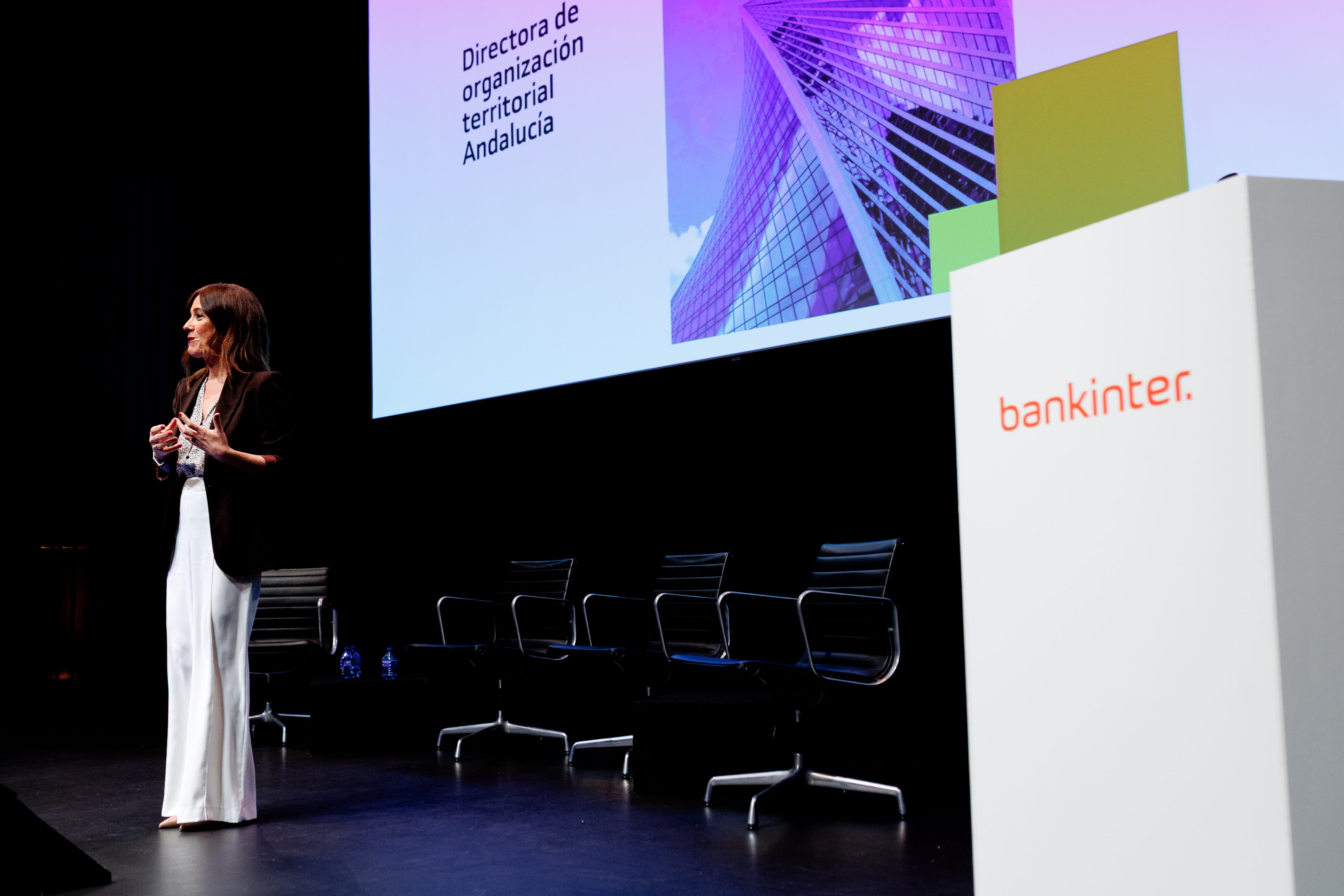
The report is published nationwide, but the presentation in Andalusia served to highlight what Andalusian CFOs have to say:
- There's greater concern than in the rest of Spain regarding the training of both CFOs and their own teams in this area. They are particularly interested in internal talent.
- Andalusian CFOs are more cautious and pragmatic; they need to see concrete, tangible results before taking the next step in adopting the technology. But when changes are suggested, they are at the forefront of those who choose to adopt them early on.
- Automation addresses a need for operational relief and organisational breathing space for the financial team: it represents a more functional view of RPA and a greater focus on return on investment.
Robotisation, yes, but with well-governed data.
Robotisation, automation and continuous transformation are a sine qua non in the world we live in. We're not talking about technology as an end in itself, but as a lever for efficiency and productivity, as highlighted by Jacobo Díaz, Bankinter CFO, at the Picasso Museum.
One fact: human resources remain the same as five years ago, yet the workload is 40% or 50% greater. How has this been possible? The answer, in Bankinter's case, lies in technology: “The investment that has been made is paying off”.
According to Jacobo Díaz, it is the chief financial officer's responsibility to continue driving productivity improvements and transformation. It was done in the past with digitalisation, and now is the time for AI. Employees themselves must use it to improve their own processes and create their own agents.
“Automation allows us to free up time so that we can do much more interesting things.”
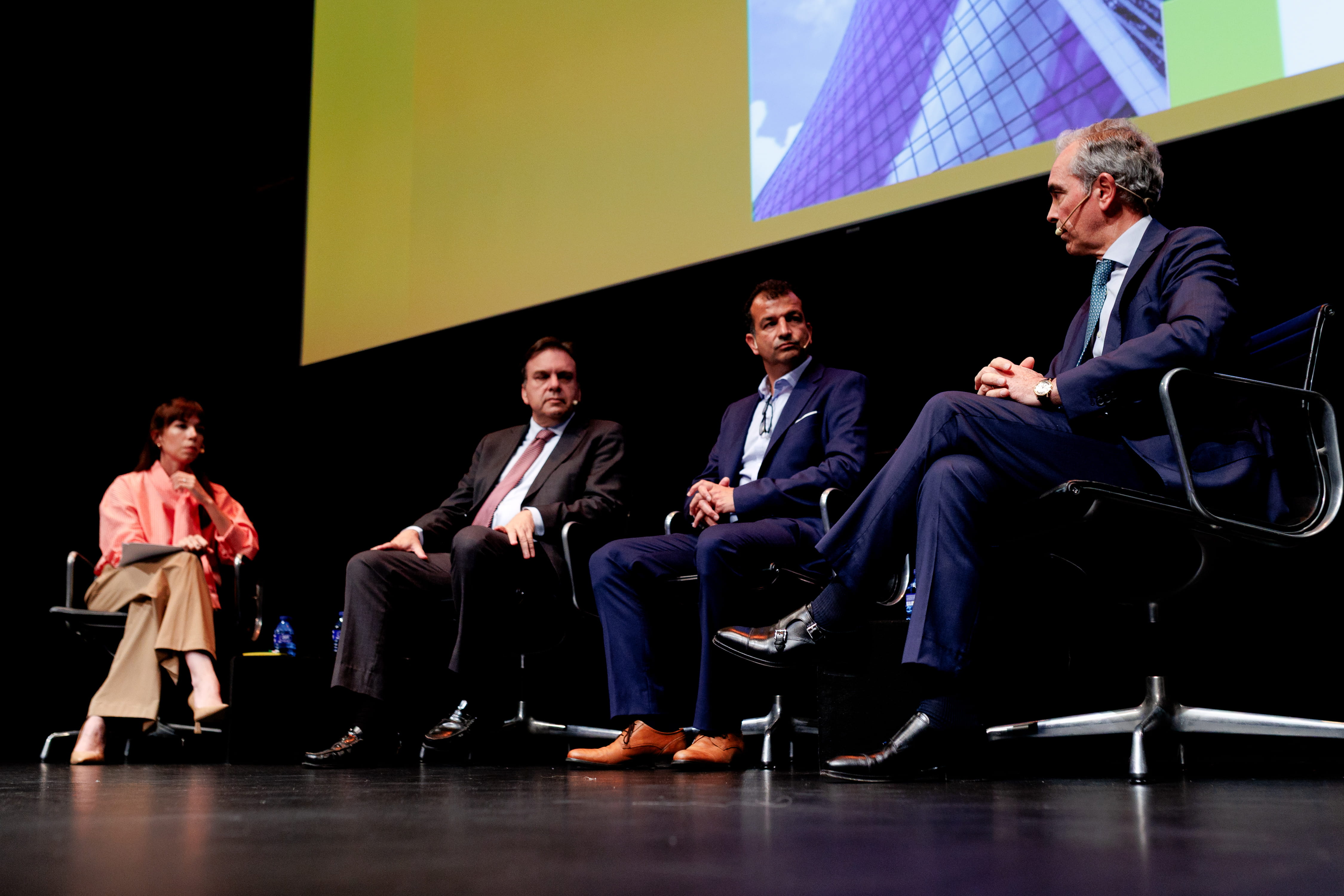
“The role of the CFO is to identify those areas where there is a higher cost from a manual perspective or where operational risk exists. The part that concerns us most is the tasks that bring no added value: automation allows us to free up time so that we can do much more interesting things”, noted the Bankinter CFO. Moreover, professionals love this because “they stop doing repetitive, boring and manual tasks”.
The CFO, as Jacobo Díaz says, “must be the leader of change”. And then involve people because without people, there is no change either. And they need to be inspired, motivated and trained”.
In his talk, he highlighted the importance of data: data quality and data governance. “No matter how much robotics or AI you have, if you don't get the data behind it right, it's all for nothing”, he warned.
“We have placed a huge emphasis on data culture. It's important for people to understand data and to use data extraction and exploitation tools. We are now in the phase of AI culture, so that everyone can start learning to carry out their own tasks more effectively. After all, what we ultimately aim to do is devote more time to value-added tasks that help with decision-making”, he noted during the round-table discussion in Malaga.
Less investment, but more intelligence when it comes to automation.
The drop in technology investment within financial departments, identified in the 2026 CFO Frontline Report, has an explanation according to the participants in the round table in Malaga: we are entering a phase of maturity and development.
“A large part of the technology investment has already been made, and companies are now in a phase of implementing and deploying that technology”, noted Domingo González Gómez, Grupo Insur CFO, during the round table, urging businesses to “invest wisely”.
“If we focus on task automation within the finance department, the logical approach is to start with the most obvious areas – that is, trying to automate those tasks you clearly see consume more working time and can be automated.”
As the Bankinter report points out, one of the concerns of CFOs is finding technology partners who do not just sell a product, but rather support organisations throughout the processes. In the case of Insur, they've chosen to build their own tools internally. And when turning to external suppliers, it's crucial that they “have a flawless understanding of the company's business and its processes”.
And always start with the basics, with what genuinely reduces time and minimises errors, providing a clear return on investment, to then gradually scale up the investment.
“If we focus on task automation within the finance department, the logical approach is to start with the most obvious areas – that is, trying to automate those tasks you clearly see consume more working time and can be automated”, noted the CFO of Insur.
Automation: from trend to tangible return.
Technology as a means and not an end, as highlighted in this year's CFO Frontline Report, was the overarching idea shared among the CFOs who took part in the Malaga presentation.
Karim Djellata, CFO of Torrent Closures, believes that technological transformation never ends in a company, as you always have to keep investing, but “it's true that we have moved from almost a trend-driven obligation – due to the fear of falling behind, having to invest no matter what – to now seeing a real return on investments already made”.
“Repetitive tasks within the finance department consume a huge amount of time, and automating them is a quick win, something that can be rolled out very quickly, very autonomously and frees up a lot of time for the department.”
And as in the case of Domingo González from Insur, Torrent also started by automating tasks that are not very strategic but are highly unproductive and repetitive, such as the digitalisation of expense claims or VAT recovery.
Torrent has also been able to develop automation tools internally, a recurring theme across the cases presented in Malaga. At least for the most basic tasks. In complex cases such as banking consolidation, or when integrating new products into the ERP, an expert partner is brought in.
“When choosing a partner, he highlighted, they must be an expert in the product you are implementing, but also almost a consultant. To implement consolidation software, for example, they need to know the rules of consolidation, equity derivation and all those topics”
Karim Djellata observes a generational shift within the finance department: new employees might not have a deep knowledge of the business, but they do have a mindset that is more oriented towards technological innovation. “This mix of profiles creates something very rich, and they help each other. And in the end, people start to understand that they now devote their time to tasks they didn't do before, and they see their true contribution to the company”.